Link Analyzer
Enter a URL
Free Link Analyzer Tool
Want to see every link on a webpage in one place? Paste a URL below and this tool will scan the page and show you the links it finds — internal links, external links, and basic link attributes. It’s a quick way to understand how a page is connected to the rest of the web and to itself.
How to Use the Link Analyzer
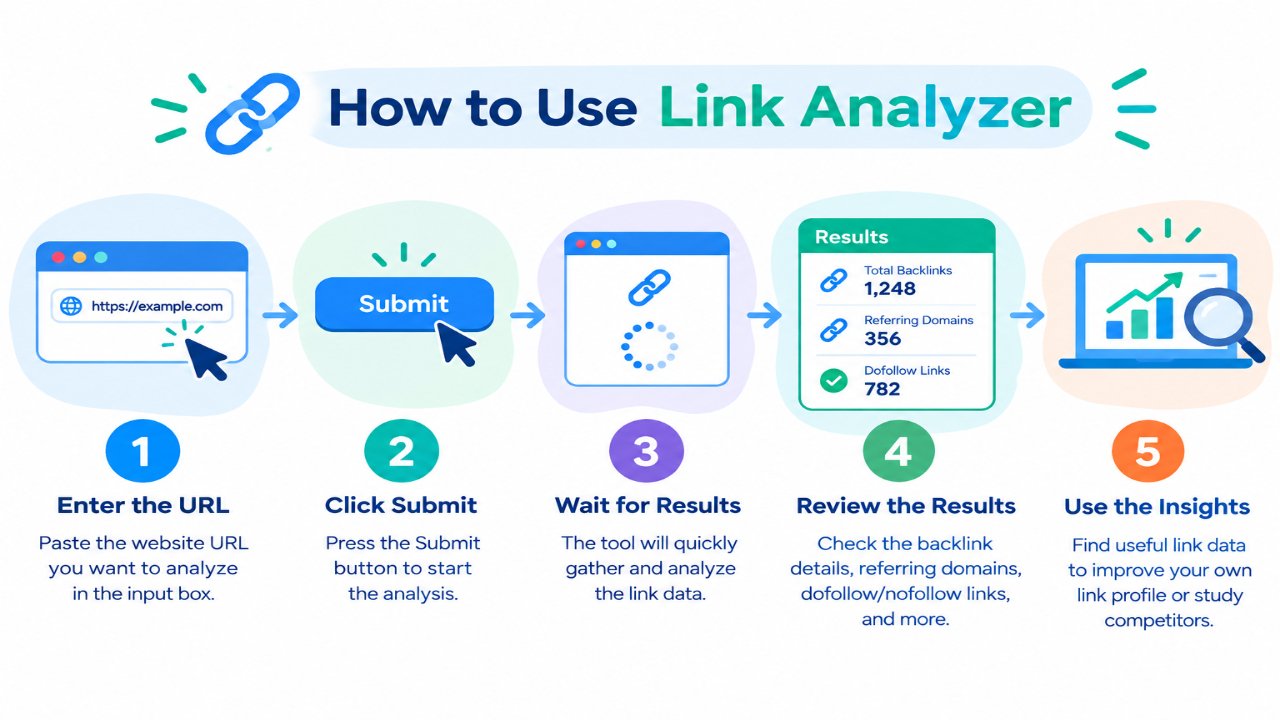
- Copy the full URL of the page you want to check
- Paste it into the box above
- Click the analyze button
- Wait a few seconds while the tool scans the page
- Review the list of internal and external links
You can use it on your own pages or on any public webpage.
What This Tool Helps You See
Most pages contain a mix of links. Some point to other pages on the same website (internal links). Others point to different websites (external links).
A link analyzer helps you quickly see:
- Which pages on the same site are being linked
- Which outside websites are being linked
- Whether links are dofollow or nofollow (when the information is available)
- Possible broken or problematic links
This is useful when you’re cleaning up a page, improving internal linking, or just trying to understand how a page is structured.
Why Checking Links Is Useful
Links affect both users and search engines.
For visitors, good internal links make it easier to move around your site and find related content. Broken links, on the other hand, create frustration.
For search engines, links help with crawling and understanding how pages relate to each other. A clean and logical link structure generally supports better SEO than a messy one full of broken or unnecessary links.
Checking links regularly is especially helpful if:
- You have an older website with many pages
- You’ve changed URLs or deleted content
- You want to improve internal linking
- You’re doing a basic SEO or content audit
Internal Links vs External Links
Internal links stay on your own website. They help distribute attention and authority between your pages and make navigation easier.
External links point to other websites. Linking out to useful, relevant sources can be helpful for readers, but it’s good to keep an eye on where you’re sending people.
The tool lets you see both so you can decide what looks healthy and what might need fixing.
A Few Practical Tips
- Fix or remove broken links when you find them
- Make sure important pages have some internal links pointing to them
- Avoid stuffing too many unnecessary external links
- Use clear, natural anchor text
- After major site changes (redesigns, migrations, content cleanup), run a link check again
Frequently Asked Questions
Is this Link Analyzer free?
Yes. You can use it without creating an account.
Can I check any website?
You can analyze most publicly accessible pages. Some sites may block automated requests.
Does it show broken links?
It helps identify link-related issues on the page. For a deeper broken-link crawl of an entire site, you may need a more advanced crawler.
Is this the same as a backlink checker?
No. This tool looks at the links on a page (outgoing and internal). A backlink checker looks at links pointing to a page from other websites.
Do I need technical knowledge to use it?
No. Just paste the URL and review the results.
Related Free Tools
- Backlink Checker
- Domain Authority Checker
- Meta Tags Analyzer
- Robots.txt Generator
- XML Sitemap Generator
Note
Link data depends on what the tool can read from the page’s HTML. Dynamically loaded links (added by JavaScript after the page loads) may not always appear in the results.