My IP Address
| Il tuo IP | 216.73.216.17 |
| Città | Columbus |
| Regione | Ohio |
| Nazione | United States of America |
| Prefisso internazionale | US |
| ISP | Amazon.com |
| Latitudine | 39.96118 |
| Longitudine | -82.99879 |
Qual è il mio indirizzo IP?
Il tuo indirizzo IP pubblico viene mostrato sopra, insieme a dettagli di base sulla posizione e sulla rete. Questa pagina rileva l'indirizzo IP che i siti Web e i servizi online vedono attualmente quando li visiti. Si aggiorna automaticamente in base alla tua connessione.
Che cos'è in realtà un indirizzo IP
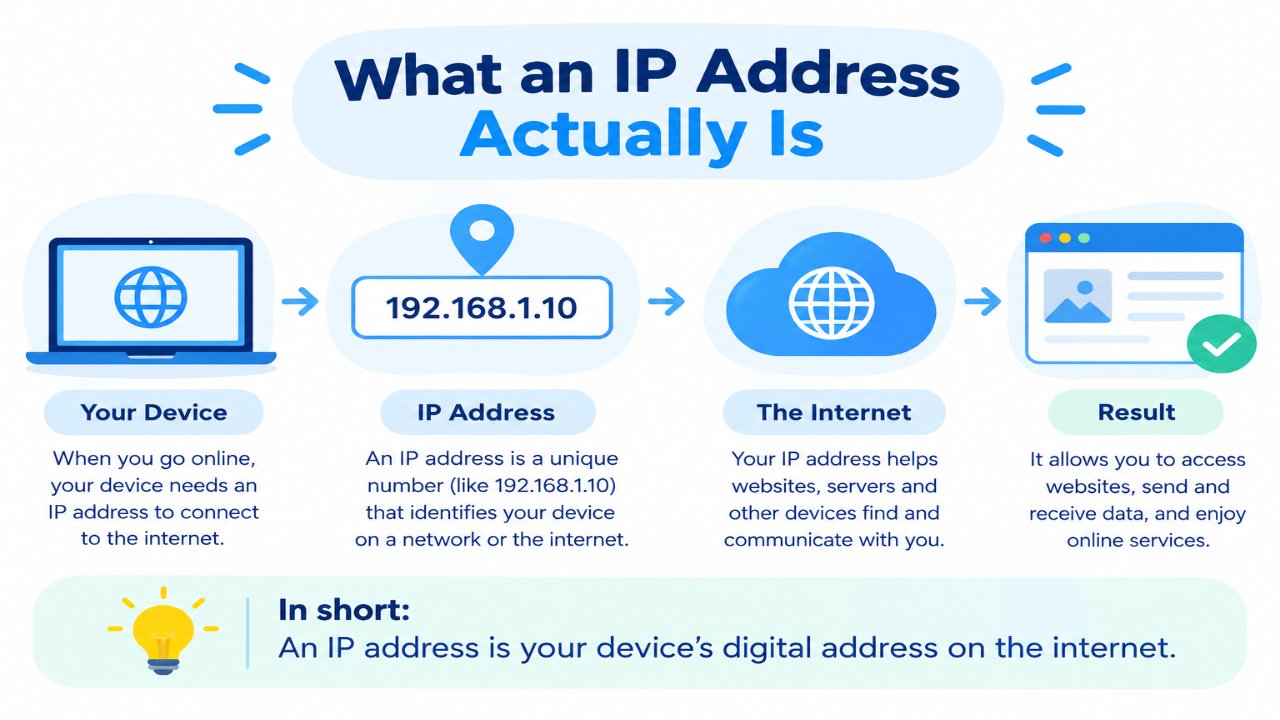
Un indirizzo IP (indirizzo Internet Protocol) è un numero univoco che identifica il tuo dispositivo o la tua rete su Internet. Funziona come un indirizzo digitale in modo che i dati sappiano dove andare.
Quando apri un sito Web, invii un messaggio o riproduci un video in streaming, il tuo indirizzo IP aiuta le informazioni a viaggiare avanti e indietro tra il tuo dispositivo e il server.
Senza gli indirizzi IP, i dispositivi non saprebbero come trovarsi online.
Cosa mostra questa pagina
Quando apri questo strumento, in genere mostra:
- Il tuo indirizzo IP pubblico
- Città / regione approssimativa
- Paese
- Fornitore di servizi Internet (ISP)
- Coordinate di posizione di base (quando disponibili)
Queste sono le informazioni che la maggior parte dei siti Web può vedere quando li visiti. Di solito non rivela il tuo indirizzo di casa esatto.
IP pubblico vs IP privato
IP pubblico
Questo è l'indirizzo visibile su Internet. Viene assegnato dal tuo provider Internet ed è ciò che questo strumento rileva.
IP privato
Questo viene utilizzato all'interno della tua rete domestica o aziendale (ad esempio, tra il tuo telefono, laptop e router). Gli IP privati non sono direttamente visibili ai siti Web.
La maggior parte degli utenti domestici ha un IP pubblico condiviso da tutti i dispositivi connessi allo stesso router Wi-Fi.
IP statico vs dinamico
La maggior parte delle connessioni Internet domestiche utilizza un IP dinamico, il che significa che può cambiare di tanto in tanto (ad esempio, dopo il riavvio di un router).
Un IP statico rimane lo stesso. Questi sono più comuni per aziende, server o persone che necessitano di un indirizzo fisso.
Perché i siti Web possono vedere il tuo IP
I siti Web e i servizi online possono vedere il tuo IP pubblico per normali motivi tecnici, come:
- Invio dei dati corretti al tuo dispositivo
- Mostrare contenuti in base al tuo paese
- Sicurezza di base e prevenzione dello spam
- Registrazione del traffico per prestazioni o sicurezza
Il tuo IP può dare un'idea approssimativa della tua posizione (città o regione), ma nella maggior parte dei casi non è abbastanza preciso da mostrare il tuo esatto indirizzo di strada.
Puoi nascondere o cambiare il tuo IP?
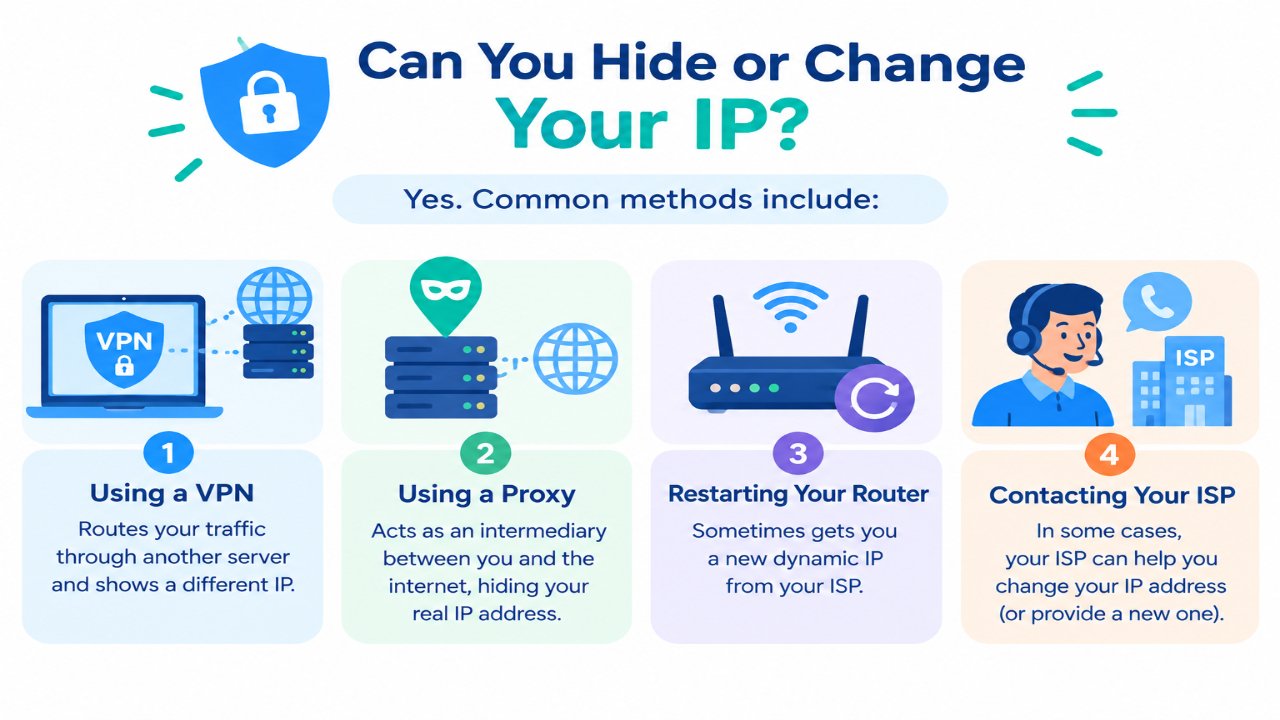
Sì. I metodi comuni includono:
- L'utilizzo di una VPN (instrada il tuo traffico attraverso un altro server e mostra un IP diverso)
- L'utilizzo di un proxy
- Il riavvio del router (a volte ti assegna un nuovo IP dinamico)
- Contattare il tuo ISP in alcuni casi
Una VPN è un modo comune utilizzato dalle persone per avere un IP pubblico diverso quando vogliono migliorare la loro privacy online. Tuttavia, una VPN non rende qualcuno completamente anonimo online.
Domande frequenti
Questo strumento è gratuito?
Sì. Puoi controllare il tuo indirizzo IP senza registrarti.
Questo mostra il mio indirizzo di casa esatto?
No. Di solito mostra solo una città o una regione approssimativa.
Perché il mio IP è diverso sul mio telefono e sul mio computer?
Se si trovano su reti diverse (dati mobili vs Wi-Fi domestico), avranno IP pubblici diversi.
Qualcuno può hackerarmi solo con il mio indirizzo IP?
Un indirizzo IP da solo normalmente non fornisce accesso diretto al tuo dispositivo. Tuttavia, è comunque meglio evitare di condividere inutilmente il tuo IP pubblico.
Perché il mio IP a volte cambia?
La maggior parte delle connessioni domestiche utilizza IP dinamici che possono cambiare quando il router si riconnette o dopo un certo periodo.
Strumenti gratuiti correlati
Nota
L'IP e i dettagli sulla posizione mostrati in questa pagina si basano su informazioni di rete pubblicamente disponibili e potrebbero non essere sempre precisi al 100%. I dati sulla posizione sono approssimativi.