XML Sitemap Generator
Entrez un nom de domaine

Générateur de sitemap XML gratuit
Créez un sitemap XML propre pour votre site Web en quelques étapes seulement.
Un sitemap XML est un fichier qui répertorie les pages importantes de votre site afin que les moteurs de recherche comme Google et Bing puissent les trouver et les explorer plus efficacement. Cet outil gratuit explore votre site Web et génère un fichier de sitemap prêt à l'emploi que vous pouvez télécharger et transférer sur votre site.
Comment utiliser ce générateur de sitemap
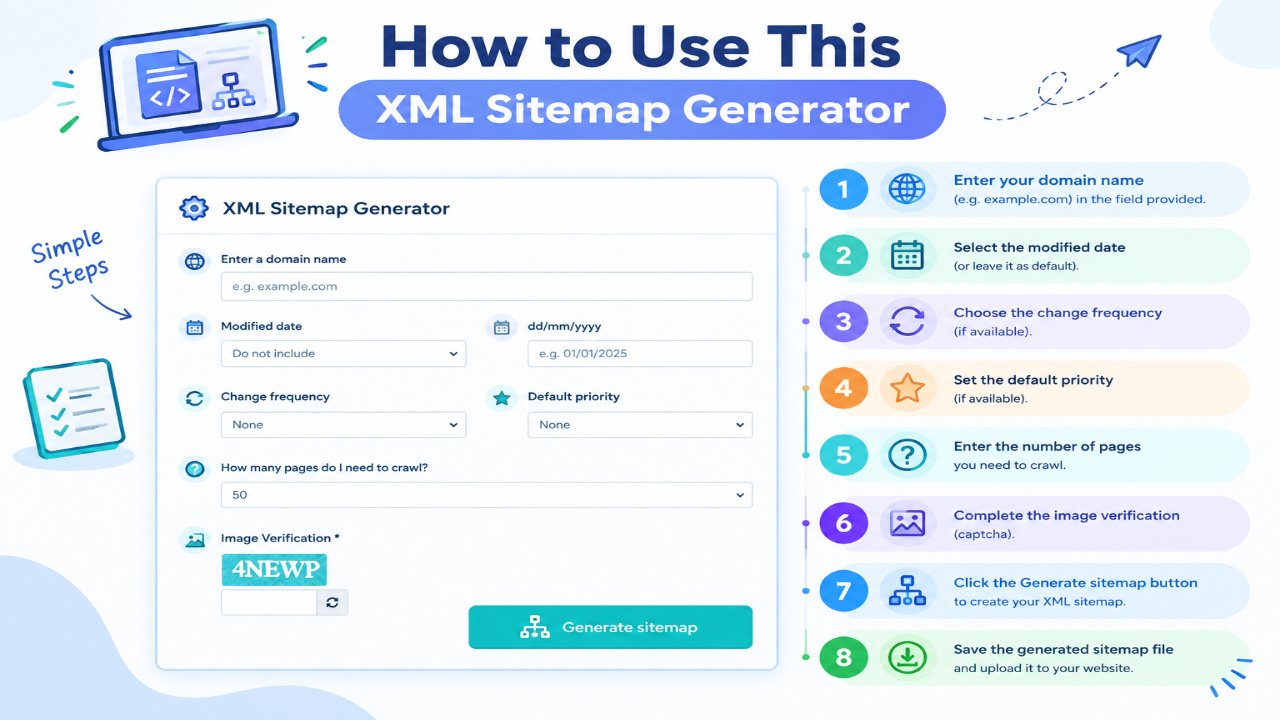
- Entrez le domaine de votre site Web.
- Choisissez des paramètres optionnels tels que la date de dernière modification, la fréquence de modification, la priorité ou la limite de pages.
- Cliquez sur le bouton de génération.
- Patientez pendant que l'outil explore votre site.
- Téléchargez le fichier XML généré.
- Transférez le fichier à la racine de votre site Web (exemple :
votresite.com/sitemap.xml). - Soumettez l'URL du sitemap dans Google Search Console et Bing Webmaster Tools.
Après le transfert, vous pouvez également mentionner l'emplacement du sitemap dans votre fichier robots.txt afin que les robots d'indexation puissent le trouver facilement.
Qu'est-ce qu'un sitemap XML ?
Un sitemap XML est un fichier structuré qui contient une liste des URL de votre site Web. Il peut également inclure des informations supplémentaires utiles telles que :
- La date de dernière mise à jour de la page
- La fréquence à laquelle la page change habituellement
- La priorité relative de la page par rapport aux autres pages du site
Les moteurs de recherche utilisent ce fichier comme un guide utile. Cela ne garantit pas que chaque page sera positionnée ou indexée, mais cela peut rendre le processus d'exploration plus efficace et complet — en particulier sur les nouveaux sites Web, les grands sites ou les sites dont le maillage interne est faible.
Considérez un sitemap comme un plan de votre site Web. Sans lui, les moteurs de recherche doivent découvrir les pages principalement par le biais des liens. Avec un sitemap, vous leur fournissez une liste claire des pages que vous souhaitez qu'ils connaissent.
Pourquoi devriez-vous avoir un sitemap
Les moteurs de recherche trouvent principalement les pages en suivant des liens. Dans de nombreux cas, cela fonctionne bien, mais des pages importantes peuvent tout de même être oubliées ou mettre plus de temps à être découvertes lorsque :
- Votre site Web est nouveau et possède peu de backlinks
- Vous publiez beaucoup de contenu régulièrement
- Le maillage interne n'est pas très fort
- Vous gérez une boutique e-commerce avec de nombreuses pages de produits
- Vous avez des pages archivées ou profondes qui sont difficiles d'accès
Un sitemap aide à résoudre ces problèmes en fournissant aux moteurs de recherche une liste directe des URL importantes sur votre site Web. Même les sites Web établis bénéficient du maintien d'un sitemap mis à jour.
Après avoir créé le sitemap
Une fois que vous avez téléchargé et transféré le fichier :
- Connectez-vous à Google Search Console.
- Sélectionnez votre propriété.
- Accédez à la section Sitemaps.
- Entrez l'URL de votre sitemap (généralement
https://votresite.com/sitemap.xml). - Cliquez sur Soumettre.
Vous pouvez faire de même dans Bing Webmaster Tools. La soumission du sitemap indique aux moteurs de recherche où se trouve votre sitemap afin qu'ils puissent traiter les URL répertoriées dans le fichier.
Bonnes pratiques pour un bon sitemap
- N'incluez que des pages actives et fonctionnelles (pas de liens rompus).
- Maintenez le sitemap à jour lorsque vous ajoutez ou supprimez des pages importantes.
- N'incluez pas de pages bloquées dans robots.txt.
- Utilisez des URL propres et canoniques.
- Pour les très grands sites Web, envisagez de créer un fichier d'index de sitemap.
- Préférez les URL HTTPS si votre site utilise SSL.
Un sitemap propre et précis est plus utile qu'un grand sitemap rempli de pages de faible valeur ou cassées.
Outils gratuits connexes
- Générateur Robots.txt
- Analyseur de balises Meta
- Vérificateur d'autorité de domaine
- Vérificateur de backlinks
- Vérificateur de position de mots-clés
Remarque
Cet outil génère un sitemap XML de base basé sur les pages qu'il peut explorer depuis votre site Web. Examinez toujours le fichier final avant de le transférer et assurez-vous qu'il contient uniquement les URL que vous souhaitez que les moteurs de recherche découvrent.